

The Ferguson effect is real.
When police officers are demonized and criminals are emboldened, more black lives are lost. The media does not care, and we will never hear the victims’ names, because it doesn’t fit the narrative. pic.twitter.com/q6Mb3Vz9Py
— Heather Mac Donald (@HMDatMI) February 24, 2026
The Ferguson effect is real. When police officers are demonized and criminals are emboldened, more black lives are lost. The media does not care, and we will never hear the victims’ names, because it doesn’t fit the narrative.
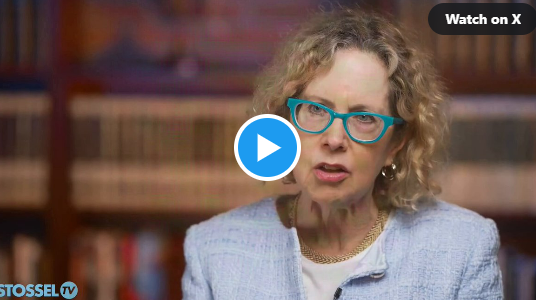
Statistics don’t lie You don’t hate the media enough for suppressing race based crimes and not reporting without bias. Matt Walsh went over black and white crime statistics and the results are telling “By raw numbers — that makes black males in America more dangerous than perhaps any other demographic in the entire world, let alone in this country”.
Matt Walsh went over black and white crime statistics and the results are telling
“By raw numbers — that makes black males in America more dangerous than perhaps any other demographic in the entire world, let alone in this country”.pic.twitter.com/KwvxvvfNSM
— 🌋🌋 Deep₿lueCrypto 🌋🌋 (@DeepBlueCrypto) September 10, 2025
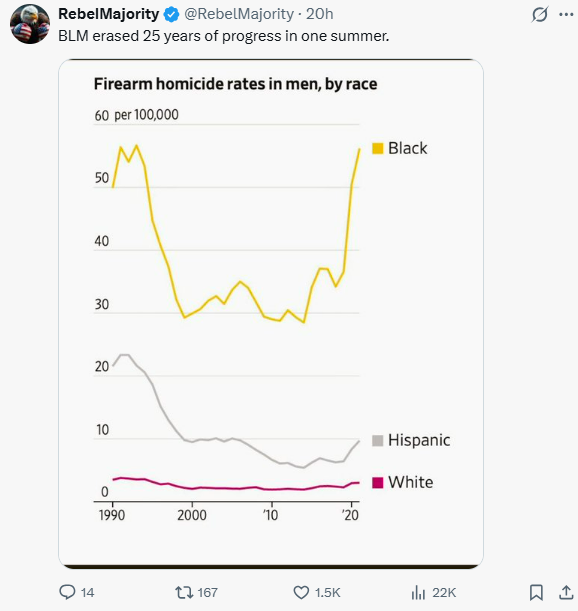
More on the Ferguson Effect via Grok:
The Ferguson effect refers to a theory that an increase in violent crime (especially homicides) in some U.S. communities resulted from reduced proactive policing. This reduction allegedly stemmed from police officers becoming more hesitant or withdrawing from aggressive enforcement due to heightened public scrutiny, distrust, hostility toward police, fear of legal consequences, or media criticism following high-profile incidents of police use of force.The term originated after the August 2014 shooting of Michael Brown in Ferguson, Missouri, which sparked widespread protests, unrest, and national debate about policing. It gained prominence in 2015, notably through writings by commentator Heather Mac Donald and comments from then-FBI Director James Comey, who described a “chill wind” affecting law enforcement morale and activity.Key Mechanisms Proposed
- Police de-policing or pulling back from discretionary stops, proactive patrols, or enforcement actions.
- This creates a perceived “power vacuum,” emboldening criminals and leading to higher crime rates.
- Some versions focus on specific triggers like viral videos of police incidents, leading to temporary drops in police activity and spikes in violence.
Evidence and Research FindingsThe concept remains highly debated, with studies producing mixed or contradictory results:
- Several early and comprehensive analyses (e.g., a 2016 study of 81 large U.S. cities using monthly data before/after Ferguson) found no systematic nationwide evidence of a Ferguson effect on overall violent crime, property crime, or aggregate trends. Crime changes were slow and not typically driven by sudden “shocks” like Ferguson.
- Some disaggregated findings showed increases in specific crimes like robbery post-Ferguson, or homicide spikes in select cities—particularly those with historically high violence, large Black populations, and socioeconomic challenges.
- A 2016 Justice Department-funded analysis by criminologist Richard Rosenfeld described a sharp ~17% rise in homicides in large cities in 2015 as “unprecedented” and found the timing aligned better with a version of the Ferguson effect (e.g., police disengagement) than alternatives, calling it a leading hypothesis needing more research.
- Later studies (e.g., 2021–2022 research) provided support in specific contexts: highly publicized officer-involved fatalities reduced discretionary police activity and correlated with violent crime increases in affected areas.
- Other research (including surveys of officers and analyses in places like Baltimore) found little to no link between scrutiny/protests and widespread de-policing or crime spikes, or no strong evidence that post-Ferguson morale drops led to substantial withdrawal from policing duties.
- Some 2020-era analyses (e.g., around George Floyd protests) identified patterns resembling a “Ferguson cycle,” with viral incidents leading to policing pullbacks and homicide surges in certain cities, followed by reversals when enforcement resumed.
Overall, while no consensus exists on a broad, universal Ferguson effect, evidence suggests localized or conditional impacts in some high-violence areas or after major scrutiny events. Critics argue the theory over-relies on anecdotes, while supporters point to correlations in police behavior and crime timing in specific cases.The idea has resurfaced in discussions of crime trends (including post-2020 homicide spikes and subsequent declines), but it remains contested in criminology.