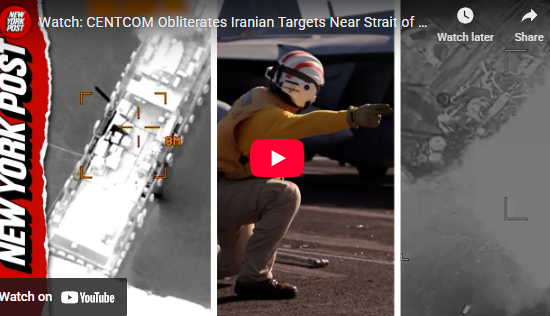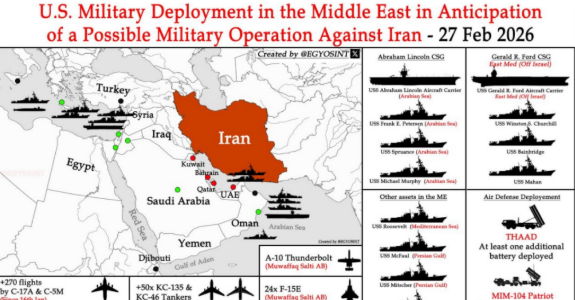


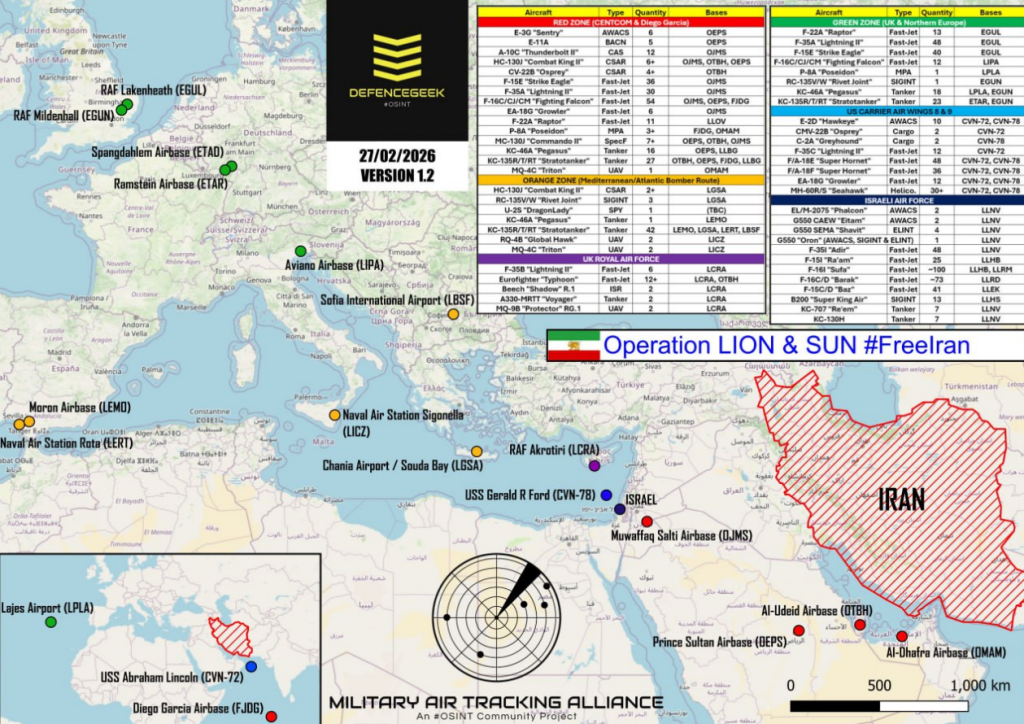
700 aircraft are right now surrounding Iran. 100 5th-generation stealth fighters. 100 refueling tankers. 20 AWACS. 18 electronic warfare jets. Two carrier strike groups. The tankers already moved from Qatar to Tel Aviv… Whatever happens next happens very soon.
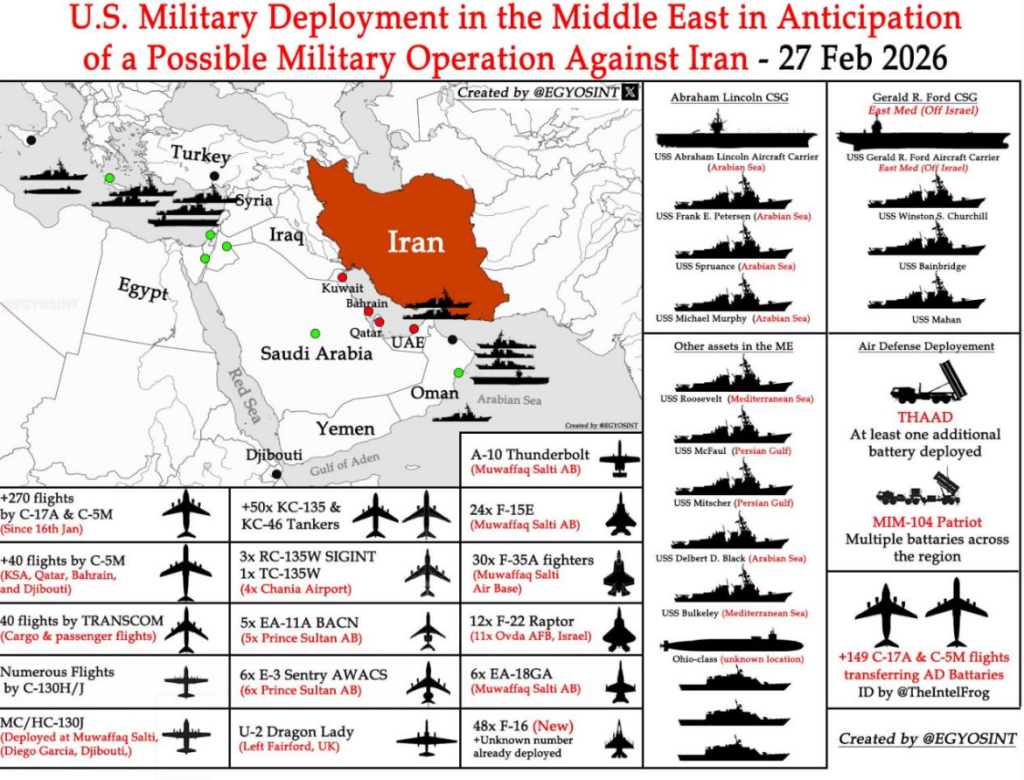
The USS Gerald R. Ford is not parked near Iran. It is parked off Israel. And nobody is asking the only question that matters: why. The $13.3 billion crown jewel of the US Navy, the largest warship ever constructed, just positioned itself off Haifa. Not in the Arabian Sea where the Lincoln sits 850 kilometers from Iranian shores loaded for offensive operations. Not in the Gulf where strike range is optimal. Off Israel. Defending Israel. This is not redundancy. This is architecture. Two carriers. Two missions. Two entirely different strategic functions. The Lincoln is the sword, positioned to launch strike packages into Iranian airspace within hours of an order. The Ford is the shield, its Aegis missile defense systems creating an umbrella over Israeli population centers against the retaliation that follows the first Tomahawk. America just split its carrier doctrine into offense and defense simultaneously.
That has not happened since the Pacific theater in 1945. But the positioning reveals something deeper than tactics. When Iran retaliates, and every wargame says Iran retaliates, its missiles and drones fly toward Israel. They will fly through the same airspace where a US carrier strike group is now stationed. Every Iranian missile aimed at Tel Aviv or Haifa must traverse the Ford’s defensive envelope. Shooting at Israel means shooting at, around, and through an American carrier group. Iran cannot retaliate against Israel without engaging American naval assets. The Ford’s position makes that physically impossible. The carrier is not defending Israel as a favor. It is positioned so that any Iranian response to American strikes automatically becomes an attack on American forces, triggering the full unrestrained weight of US military response without a single additional political decision required. This is escalation insurance written in steel and seawater.
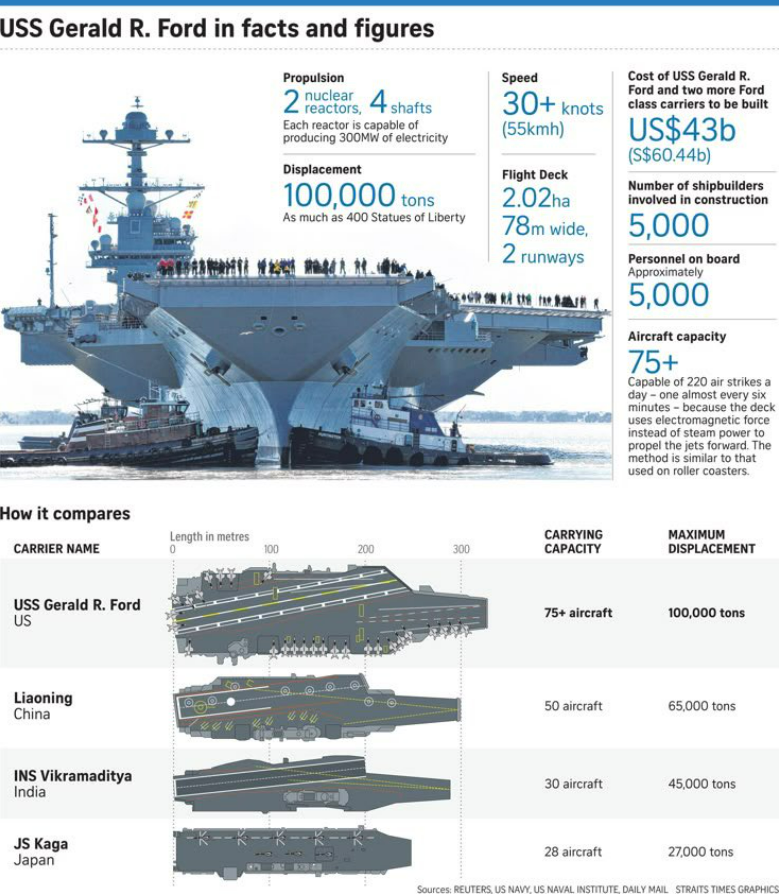
If the campaign goes longer than planned, if munitions run thin in 7 to 10 days, if allies hesitate, the Ford’s position ensures that Iranian retaliation does the political work Washington cannot do alone: it transforms a limited American strike into an act of self-defense that no ally can refuse to support. You do not park a $13.3 billion carrier where the enemy’s return fire will hit it unless you want the enemy’s return fire to hit it. The Ford is not there to prevent escalation. The Ford is there to guarantee that if escalation comes, it comes on terms that make American restraint politically impossible and allied participation politically unavoidable. Thread at X
- 700 aircraft surrounding Iran right now is no joke. 100 stealth fighters, 100 tankers already shifted to Tel Aviv, 20 AWACS, 18 electronic warfare jets, and two full carrier strike groups ready to go. Trump’s still waiting for those “golden words” on zero nukes, but the hardware on the ground tells a different story. This isn’t routine flexing anymore. Everything is staged for sustained ops if needed. The next few days will decide a lot. – Alpha Pulse
US Regional Forces Around Iran (Feb 2026) vs Iran National Military

Category                     | US (Regional)              | Iran (Total)     | Quick Notes
-----------------------------|----------------------------|------------------|---------------------------------
Active Personnel             | 30k–50k (incl carriers)    | 610k             | US: surge + bases; Iran: +350k reserves +220k paramilitary
Total Aircraft               | ~300–330                   | 551              | US: mostly modern (F-35/F-22/F-15); Iran: older, degraded post-2025
Fighters/Attack              | ~200 (stealth heavy)       | 209              | US qualitative edge
Attack Helicopters           | Limited                    | 13               | US air focus = fixed-wing
Tanks                        | Negligible                 | 2,675            | Iran ground strength; US not invasion-oriented
Armored Vehicles             | Limited                    | 75,939           | —
Artillery/MLRS               | Limited (Patriot/THAAD)    | 2,777            | Iran strong in rockets
Naval Vessels                | 16–18 (guided missile)     | 109              | US: high-tech; Iran: mostly small boats
Aircraft Carriers            | 2 (Lincoln + Ford)         | 0                | Each ~70–80 aircraft +5k personnel
Submarines                   | 1–2                        | 25               | Iran: midget subs for Gulf
Defense Budget (relevant)    | N/A (US total ~$900B)      | $9.23B           | US tech advantage via spending

Key Takeaways:
- US: Air/naval dominance, stealth, precision, carriers
- Iran: Numbers in ground/artillery, missiles/drones, proxies, asymmetric
- Direct conventional fight → US edge; but Iran can disrupt via missiles/Strait of Hormuz/proxies

Put all of this together and you have Iran getting bombed today or tomorrow 2/28 unless Trump calls it off.... Mario Nawfal’s Full thread at X